

Contractor insurance coverage is a set of policies, not one product. Most contractors start with commercial general liability, then add commercial auto, workers’ compensation and, depending on the work, coverage such as builders risk or professional liability. The right mix depends on your trade, your crew and what your contracts demand, so it is built around your jobs rather than bought off a shelf. As an independent agency in Sugar Land, Texas, we compare business insurance options from over 25 carriers, so one conversation can cover each of those pieces.
TL;DR
- General liability pays for injury or property damage you cause to other people, including damage that shows up after a job is finished. It does not cover your own crew, your vehicles or your own work.
- Most contractors also need workers’ compensation, employer’s liability and commercial auto, and many add builders risk, professional liability, inland marine or umbrella coverage.
- Premiums depend on your trade, sales, payroll and location. Published ranges are very wide, so a quote on your own numbers is the only useful figure.
- Contracts and licensing, not just good sense, often set what you must carry and at what limits. Read the insurance clause before you bid.
Table of Contents
- What contractor insurance coverage includes
- What general liability covers, in plain terms
- What general liability does not cover
- The other policies most contractors carry
- When you are required to carry it
- What drives the cost
- How to build the right package, step by step
- Getting a contractor quote with Inshora Group
- FAQ
- Sources
What contractor insurance coverage includes
A contractor faces several different kinds of loss: someone is hurt on a site, a client’s property is damaged, a worker is injured, a truck is in a crash, tools are stolen, a design mistake costs a client money. No single policy answers all of them. Each coverage line is built for one family of risk.
AIA Contract Documents, the body that publishes widely used construction contract forms, says contractors should in most instances carry commercial general liability, automobile liability, workers’ compensation and employer’s liability. It adds that construction may also call for builder’s risk, that contractors providing design services should have professional liability, and that project-specific pollution coverage may be needed. Its core point is that coverage depends on the project’s scope, type and special requirements.
That is why a roofer, an electrician and a remodeling firm that also draws plans will not end up with identical programs. It is also why the cheapest-looking package is often the wrong one: a policy that does not match your work leaves the gap exactly where a claim lands.
What general liability covers, in plain terms
General liability is the foundation, and it is the policy most contract clauses ask for first. The Texas Department of Insurance explains that commercial general liability protects business owners against claims for bodily injury, property damage, and personal and advertising injury such as slander and false advertising.
In practice that breaks into pieces a contractor will recognize:
- Premises and operations. Pays when someone is injured or property is damaged on your premises or as a result of your business operations. A visitor trips over your materials at a client’s home, or a dropped tool damages a customer’s floor.
- Products and completed operations. Pays for injury or damage away from your premises caused by your products or completed work. This matters a great deal to contractors, because liability can arise after the work is finished and away from the business premises, not only from an accident at an active jobsite. A deck fails a year after you built it and someone is hurt: that is the kind of claim this part is designed for.
- Personal and advertising injury. Covers claims such as slander or false advertising.
The National Association of Insurance Commissioners (NAIC), the organization of state insurance regulators, describes the same four broad categories: bodily injury, damage to others’ property, personal injury such as slander or libel, and false or misleading advertising.
A simple example
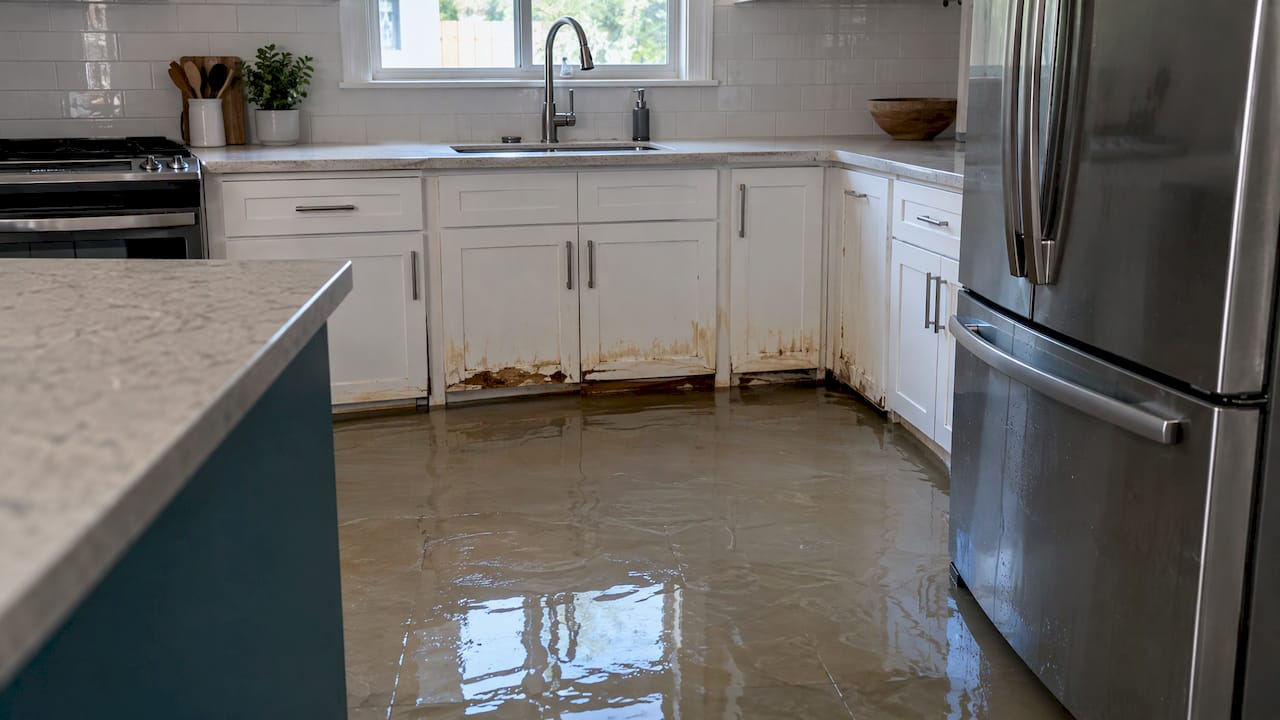
Suppose you are replacing a water heater and a fitting fails after you leave, flooding the homeowner’s kitchen and ruining the cabinets. The homeowner’s claim for the damaged property is a third-party claim, which is what general liability is designed to answer. If a week later a neighbor slips on the wet driveway and breaks a wrist, the bodily injury part responds to that too. Without the policy, you would pay the repairs, the medical bills and the legal defense from your own account.
What general liability does not cover
Knowing the edges of general liability is where most of the value in this topic sits. The NAIC notes that CGL generally excludes employee injuries, vehicle-operation claims, and professional errors and omissions, which call for separate coverage. The Texas Department of Insurance likewise says CGL excludes workers’ compensation and employers’ liability.
One more point catches contractors off guard. General liability is designed for third-party claims, not for your own losses. A construction law firm’s guide to CGL puts it this way: the policy does not pay to repair or replace your own work. The same guide notes that residential exclusions are increasingly written into CGL policies for condominium construction and may void coverage entirely. If you build or remodel multifamily or condo projects, read the exclusions list line by line with your agent before you sign a contract.
Here is how the main coverage lines divide the work:
| Coverage | What it answers | Typical trigger |
|---|---|---|
| General liability | Injury or property damage to others | A client’s property is damaged, a visitor is hurt |
| Workers’ compensation | Your employees’ job injuries and illness | A crew member is hurt on site |
| Commercial auto | Crashes involving business vehicles | A work truck hits another car |
| Professional liability | Errors in design or advice | A plan you prepared causes a client loss |
| Builders risk | The building under construction | Fire, theft or storm damage before completion |
| Inland marine | Tools and equipment in transit or on site | A trailer of tools is stolen |
| Umbrella | Extra limits above the underlying policies | A claim exceeds your general liability limit |
The other policies most contractors carry
Workers’ compensation and employer’s liability
USAGov explains that workers’ compensation programs generally provide cash payments for lost wages, medical expenses and death-related benefits for job-related injury or illness, and that private-employer claims run through state programs under each state’s rules. Because the rules are set state by state, check yours. California is a good example of how firm they can be: its Contractors State License Board states that employers, including construction employers, must carry workers’ compensation even with one employee, and that certain license categories, such as roofing, HVAC and concrete, must carry it or have valid self-insurance even without employees.
Employer’s liability is the companion coverage. It sits alongside workers’ compensation and responds to certain employee-injury claims that fall outside the standard benefits system. AIA lists it with the core contractor coverages for that reason.
Commercial auto
If a truck, van or trailer carries your tools and crew to the job, a personal auto policy is generally not built for that use, and general liability excludes vehicle claims. Commercial auto is the coverage designed for business vehicles. We also write auto insurance, so your personal and work vehicles can be reviewed in the same conversation.
Professional liability
If you design as well as build, you take on a risk that general liability does not address. AIA says contractors providing design services should have professional liability. Design-build firms, and contractors with construction management duties, are the typical buyers. The NAIC also lists professional liability or errors and omissions among the separate coverages for risks outside standard CGL.
Builders risk, inland marine and umbrella
Builders risk protects the structure while it is being built. Who buys it, you or the owner, is usually set in the contract, so it is one more reason to read that document first. Inland marine, a policy type for tools and equipment that move from site to site, protects the gear that general liability does not.
Umbrella coverage adds limits above your underlying liability policies. The NAIC describes umbrella liability as protection above standard CGL limits, with typical limits of $1 million to $5 million. Larger commercial jobs often ask for limits higher than a base policy provides, and an umbrella is the usual way to reach them.
When you are required to carry it
There is no single national rule for private contractors. Requirements come from three places.
- State law and licensing. Some states make coverage part of getting or keeping a contractor license. Workers’ compensation rules also differ by state, as the California example shows. Confirm the rule for each state where you work.
- Your contracts. AIA explains that owner-contractor agreements commonly specify required insurance types and limits, and that specialized coverages such as cyber or asbestos-abatement liability may be written in when relevant. In practice, most contractors meet their first insurance requirement when a client asks for a certificate of insurance, the one-page proof your agent issues showing what you carry and at what limits.
- Government work. The Federal Acquisition Regulation says federal contractors must comply with applicable federal and state workers’ compensation statutes, and requires employer’s liability coverage of at least $100,000 on covered contracts, except in states with monopolistic workers’ compensation funds.
A surety bond is a different instrument. AIA notes that bonds provide a remedy, such as project completion, and may give the surety rights to oversee a replacement contractor. A bond guarantees performance to the owner. It is not insurance for you.
If you are an LLC, the entity form does not replace coverage. Limited liability can help separate business and personal assets, but a claim still lands on the business, and the contract will usually require a certificate of insurance anyway. Our guide to commercial business insurance requirements in Texas covers the Texas side in more detail.
What drives the cost
No honest article can give you one price. A published cost study for contractors found modeled single-policy prices ranging from $6 to $26,879 a month, with cost varying by coverage, location, trade and business size. The spread is the point: a part-time handyman with a small policy and a roofing company with a full crew sit at opposite ends.
The NAIC explains that liability premiums are linked to the type of product or service and to estimates of sales and payroll, and that the type of business shapes premiums because perceived risk differs by operation. In practical terms, these are the levers:
- Trade and tasks. Work at height, with fire or with structural elements is rated differently from interior finishing.
- Payroll and sales. Larger revenue and more employees mean more exposure.
- Limits and deductibles. Higher limits raise the premium; a higher deductible can lower it.
- Location. Claims environments and workers’ compensation rules differ by state.
- Subcontractor use. How you hire, and whether subs carry their own coverage, affects the rating.
Carriers weigh these factors differently, which is where an independent agency earns its keep. We compare coverage options across more than 25 carriers, and our clients have frequently reported saving over $600 a year on average. Your own number depends on your business, so the way to learn it is a quote built on your real payroll and revenue.
How to build the right package, step by step
- List what you actually do. Write down your trades, any design or management duties, whether you use subcontractors, how many vehicles you run and where your tools live. Insurance is rated on operations, so precision here is worth money.
- Pull the insurance clauses from your contracts and license rules. Note required types, minimum limits, additional-insured wording and any specialized coverage. Building to the contract avoids losing a bid over a missing endorsement.
- Start with the core. General liability, workers’ compensation with employer’s liability if you have employees, and commercial auto if you drive for work. This is where our business insurance team begins.
- Add what your work calls for. Professional liability for design duties, builders risk where you are responsible for the structure, inland marine for tools, umbrella for higher limits.
- Read exclusions before limits. Check completed-operations terms and any residential or condo exclusions. The coverage you think you have is the coverage the exclusions leave you.
- Compare across carriers. Different carriers price the same trade differently. We run that comparison for you and hand back options side by side, so you are not filling in a dozen applications.
- Get certificates ready. Ask for certificate-of-insurance turnaround to be part of the service, since clients often request one the day you win the job.
- Review every year. Revenue, headcount, equipment and contract types change. A policy rated on last year’s payroll can be wrong this year, so revisit it at each renewal.
Our pages on what type of insurance is best for a small business and 10 questions to ask your business insurance agent can help you prepare for that conversation.
Getting a contractor quote with Inshora Group
Inshora Group is an independent insurance agency in Sugar Land, serving Richmond, Katy and Houston as well. We provide quotes and coverage comparisons for business insurance from over 25 top-rated carriers, so a Texas contractor can see several options for the same operation instead of one carrier’s answer. We also place home, auto, rental property, flood and life coverage and offer retirement planning, which matters when the business owner is also the family’s breadwinner and wants the whole picture reviewed together.

To start, request a business insurance quote with your trade, payroll, revenue and any contract insurance requirements to hand.
FAQ
What kind of insurance do contractors need?
Most contractors need commercial general liability, workers’ compensation with employer’s liability if they have employees, and commercial auto if they use vehicles for work. Depending on the job, they add builders risk, professional liability, inland marine or umbrella coverage. Your contracts and state rules set the specifics.
What is general liability insurance?
General liability is commercial coverage for claims that your business caused bodily injury, property damage, or personal and advertising injury to someone else. For contractors it includes injury or damage caused by completed work. It does not cover your employees’ injuries, your vehicles or your professional errors.
Does general liability replace workers’ compensation?
No. General liability excludes workers’ compensation and employers’ liability, so injuries to your own employees need separate coverage. Workers’ compensation rules vary by state, so confirm what applies where you work.
Should an LLC have liability insurance?
Yes. An LLC is a legal structure, not an insurance policy, and the business itself still faces claims. Clients and general contractors also commonly require a certificate of insurance before you start work.
How much does contractor insurance cost?
It varies widely with your trade, payroll, sales, limits and location. One published study modeled single policies from $6 to $26,879 a month. A quote based on your own figures gives you the real number.
Sources
- Risk Management for Contractors: Insurance & Bonds Basics, AIA Contract Documents
- Commercial general liability insurance, Texas Department of Insurance
- Small business insurance guidance, NAIC
- Managing Construction Risk Through Commercial General Liability Insurance, Peckar & Abramson
- Workers’ compensation, USAGov
- Workers’ Compensation Requirements, California Contractors State License Board
- Subpart 28.3 Insurance, Federal Acquisition Regulation
- Contractor & Construction Insurance Cost (2026), MoneyGeek
